
ABOUT CRADIRA
Postpartum was never just about the baby.
Postpartum support often starts with feeding, settling, sleep and newborn care.
But real life also includes recovery, relationships, work, laundry, bottles, meals, visitors, appointments and the sudden realization that you are completely responsible for another human being.
Cradira provides practical postpartum support for baby, parents and the household through in-home care, virtual guidance, household systems and digital resources. We help make the transition more manageable, with shared information, clearer responsibilities and support that fits real life.

ABOUT CRADIRA
Postpartum was never just about the baby.
Postpartum support often starts with feeding, settling, sleep and newborn care.
But real life also includes recovery, relationships, work, laundry, bottles, meals, visitors, appointments and the sudden realization that you are completely responsible for another human being.
Cradira provides practical postpartum support for baby, parents and the household through in-home care, virtual guidance, household systems and digital resources. We help make the transition more manageable, with shared information, clearer responsibilities and support that fits real life.

35+
years combined experience

Hundreds
of families supported
Parent-led support
built around your goals

No judgement. Ever.
support that meets you where you are
Families didn’t necessarily need more advice. They needed support that worked in real life.
After years of supporting expecting and new families, we kept seeing different versions of the same thing.
Parents read the books. They had bought the gear. They had lists, apps, saved posts, advice from friends, recommendations from professionals, and approximately 47 conflicting opinions from the internet.
Then the baby arrived.
Suddenly someone had to remember when the baby last ate, where the clean bottles were, whether there were enough diapers, what the healthcare provider said, whose turn it was to sleep, what that weird noise meant, and whether everyone was somehow doing this completely wrong.
Usually while very tired.
The practical load was huge.
But so was the emotional one.
New parents weren’t only learning how to care for a baby.
They were becoming parents.
The people behind Cradira
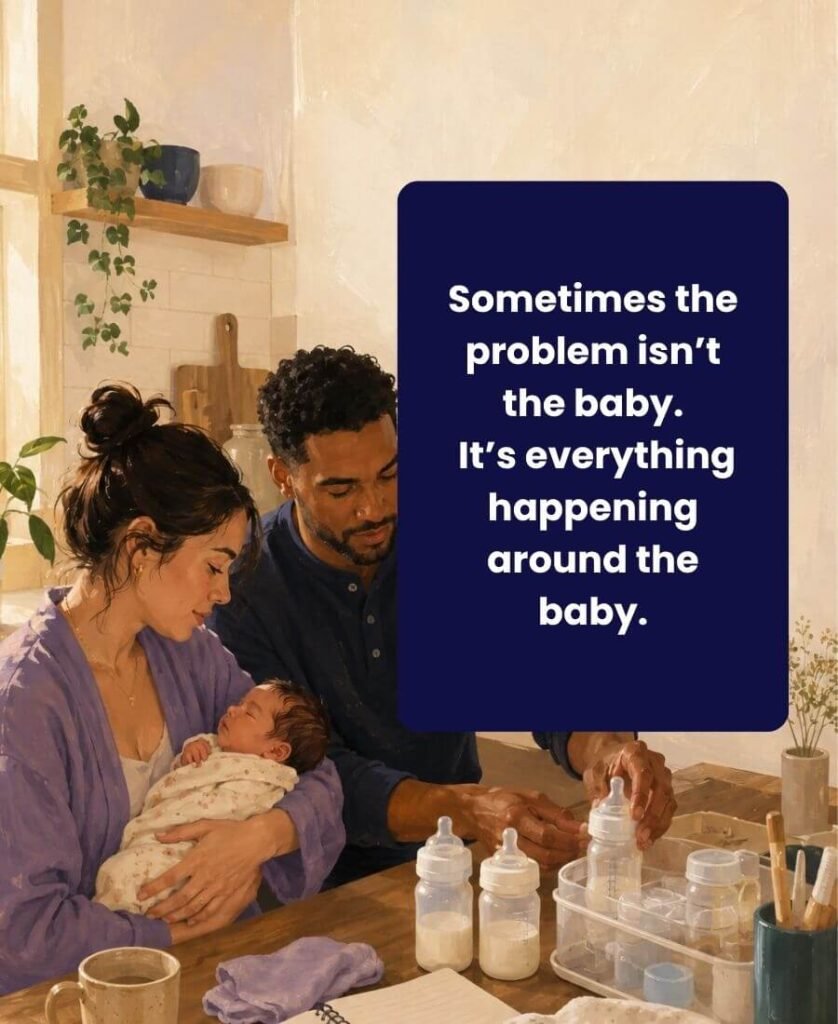
Cradira was founded by Angelina Kiwanuka-Quinlan and Natasa Oliveira after years of working directly with expecting and new families.
Between us, we’ve spent decades inside real homes during one of the biggest transitions families experience.
We’ve seen beautiful plans meet complicated births. We’ve watched confident adults suddenly second-guess themselves. We’ve helped parents through long nights, difficult days and the completely ordinary moments that somehow feel enormous when you’re responsible for a brand-new person.
And after all those years, we still believe some of the best support begins with a question.

Angelina Kiwanuka-Quinlan
Co-founder
Angelina brings more than two decades of experience supporting families through pregnancy, birth, postpartum and newborn care.
Her work has included perinatal and postpartum support, childbirth education, newborn care and sleep support, with much of her current in-home work happening overnight.
She is particularly interested in what happens when the plan meets real life.
What is this family actually trying to accomplish? What keeps getting in the way? Where is information getting lost? What happens at 3 a.m. when everyone is tired? And what can be changed now so tomorrow is a little easier?
Known for: pattern spotting, overnight support, practical problem-solving, and asking, “Why are we still doing it this way?”

Natasa Oliveira
Co-founder
Natasa brings more than 15 years of hands-on experience supporting babies and families through postpartum life.
Her approach is calm, practical and grounded in what families actually need in their homes.
That might mean caring for baby while a parent rests, helping someone understand what their baby is communicating, noticing a routine that keeps getting unnecessarily complicated, or simply helping a family find its footing while everything still feels new.
Known for: calm daytime support, practical baby care, meeting families where they are, and helping parents feel capable rather than supervised.
We support the baby. We support the people. We pay attention to what’s happening around both.
Postpartum support can easily become a list of tasks.
Feed the baby. Settle the baby. Wash the bottles. Let the parents sleep.
Those things matter.
But we’re also paying attention to everything happening around those tasks
Baby care
- Responsive newborn care, feeding, settling and sleep support.
Parent care
- Recovery, rest, reassurance and confidence.
Household support
- Roles, routines, supplies, handovers and the repeated little problems that quietly make the day harder.
A connected picture
- Because what happens with the baby affects the parents, and what happens in the household affects both.
Sometimes the most useful thing we do is care for the baby. Sometimes it’s helping you see that you’re doing better than you think.
We support the baby. We support the people. We pay attention to what’s happening around both.
Postpartum support can easily become a list of tasks.
Feed the baby. Settle the baby. Wash the bottles. Let the parents sleep.
Those things matter.
But we’re also paying attention to everything happening around those tasks
Baby care
- Responsive newborn care, feeding, settling and sleep support.
Parent care
- Recovery, rest, reassurance and confidence.
Household support
- Roles, routines, supplies, handovers and the repeated little problems that quietly make the day harder.
A connected picture
- Because what happens with the baby affects the parents, and what happens in the household affects both.
Sometimes the most useful thing we do is care for the baby. Sometimes it’s helping you see that you’re doing better than you think.
We support the baby. We support the people. We pay attention to what’s happening around both.
Postpartum support can easily become a list of tasks.
Feed the baby. Settle the baby. Wash the bottles. Let the parents sleep.
Those things matter.
But we’re also paying attention to everything happening around those tasks
Baby care
- Responsive newborn care, feeding, settling and sleep support.
Parent care
- Recovery, rest, reassurance and confidence.
Household support
- Roles, routines, supplies, handovers and the repeated little problems that quietly make the day harder.
A connected picture
- Because what happens with the baby affects the parents, and what happens in the household affects both.
Sometimes the most useful thing we do is care for the baby. Sometimes it’s helping you see that you’re doing better than you think.
So what do we actually mean by a system?
A household system is simply something you set up so you don’t have to make the same decision over and over again.
You decide once. You put the information somewhere people can find it. You make the next step easier.
Then the next time the situation comes up, there’s less searching, less explaining, less remembering and usually less work.
A good system saves your brain for something else.

Put it where it’s used
Feeding supplies, diapers, recovery items and everyday essentials live where people actually need them.

Make information find-able
Important details don’t have to stay in one person’s memory.

Decide before you’re tired
Make the plan while everyone has bandwidth, not at 3 a.m.
Make repeat tasks easier
If something happens every day, it shouldn’t require reinventing the process every day.
Less searching. Less explaining. Less repeated thinking.
No, we are not suggesting quarterly household performance reviews.
But organizations figured out something useful a long time ago:
Important information shouldn’t live entirely inside one person’s head.
They use handovers. Shared information. Clear responsibilities. Backup plans. And processes for things that happen repeatedly.
Yet families often bring home a brand-new human and are expected to coordinate everything through memory, exhaustion and whispered conversations at 2 a.m.
That seems a little unreasonable.
Clear enough that people know what’s happening. Flexible enough to survive real life.
What we believe
Baby doesn’t need perfection. Your family needs something sustainable.

Support should create capacity.
The goal isn’t to make you dependent on us. Good support should make the next feed, the next night, and eventually the next week a little easier.

Partners aren’t assistants.
One parent shouldn’t automatically become the keeper of all baby knowledge while everyone else waits for instructions. Partners and co-parents deserve room to learn, decide and build confidence too.

Advice needs context.
A lot of parenting advice sounds definitive until you ask, “What are you actually trying to accomplish?” We ask questions before we give answers.

There isn’t one perfect way.
Babies, families, bodies, relationships, cultures, values and capacities are different. We can talk about safety, evidence and trade-offs. Your family still gets to be your family.

Harder isn’t automatically better.
There are no bonus parenting points for making something unnecessarily difficult. If there’s a safe, realistic way to make something easier, we’re interested.
Systems should remove work, not become work.
The goal isn’t a perfectly managed household. It’s fewer repeated decisions, less friction and more capacity for the things that matter.
What we believe
Baby doesn’t need perfection. Your family needs something sustainable.
Support should create capacity.
The goal isn’t to make you dependent on us. Good support should make the next feed, the next night, and eventually the next week a little easier.
Partners aren’t assistants.
One parent shouldn’t automatically become the keeper of all baby knowledge while everyone else waits for instructions. Partners and co-parents deserve room to learn, decide and build confidence too.
Advice needs context.
A lot of parenting advice sounds definitive until you ask, “What are you actually trying to accomplish?” We ask questions before we give answers.
There isn’t one perfect way.
Babies, families, bodies, relationships, cultures, values and capacities are different. We can talk about safety, evidence and trade-offs. Your family still gets to be your family.
Harder isn’t automatically better.
There are no bonus parenting points for making something unnecessarily difficult. If there’s a safe, realistic way to make something easier, we’re interested.
Systems should remove work, not become work.
The goal isn’t a perfectly managed household. It’s fewer repeated decisions, less friction and more capacity for the things that matter.
What we believe
Baby doesn’t need perfection. Your family needs something sustainable.
Support should create capacity.
The goal isn’t to make you dependent on us. Good support should make the next feed, the next night, and eventually the next week a little easier.
Partners aren’t assistants.
One parent shouldn’t automatically become the keeper of all baby knowledge while everyone else waits for instructions. Partners and co-parents deserve room to learn, decide and build confidence too.
Advice needs context.
A lot of parenting advice sounds definitive until you ask, “What are you actually trying to accomplish?” We ask questions before we give answers.
There isn’t one perfect way.
Babies, families, bodies, relationships, cultures, values and capacities are different. We can talk about safety, evidence and trade-offs. Your family still gets to be your family.
Harder isn’t automatically better.
There are no bonus parenting points for making something unnecessarily difficult. If there’s a safe, realistic way to make something easier, we’re interested.
Systems should remove work, not become work.
The goal isn’t a perfectly managed household. It’s fewer repeated decisions, less friction and more capacity for the things that matter.
THE PART THAT’S HARDER TO PUT ON A CHECKLIST
Becoming responsible for another human is a very big thing.
People talk a lot about how much you’ll love your baby.
They talk less about the weight of realizing that this tiny person depends on you for food, warmth, comfort, safety, sleep, medical care and a thousand decisions you’ve never had to make before.
And somehow you’re supposed to make those decisions while recovering, learning a person you’ve only just met, sleeping in fragments and receiving advice from approximately everyone you’ve ever known.
Sometimes postpartum support means giving you information.
Sometimes it means taking something off your plate.
And sometimes it means being the experienced person in the room who can say:
“You’re not failing. There isn’t one right way to do this. Here’s what I’m seeing and look how much you already know.”
Confidence usually doesn’t arrive all at once. It grows.
You notice a cue. You figure out what helped. You survive a hard night. You change something that wasn’t working.
And eventually you realize you aren’t starting from zero anymore.
You know your baby.
Support that fits real life.
We don’t hand families one “right” way to do postpartum. We start with the goals, resources, relationships, routines and limits of your actual life.
Different goals
Some families want to protect sleep. Some are focused on feeding, recovery or simply making this week feel manageable.
Different households
Partners, grandparents, siblings, pets, work and support networks all change what will realistically work.
Different bandwidth
Some people want all the information. Others want someone to help them decide what matters right now.
Different babies
There is no universal routine that works exactly the same way for every baby.
We start with your actual life, not an idealized version of postpartum.
Support that fits real life.
We don’t hand families one “right” way to do postpartum. We start with the goals, resources, relationships, routines and limits of your actual life.
Different goals
Some families want to protect sleep. Some are focused on feeding, recovery or simply making this week feel manageable.
Different households
Partners, grandparents, siblings, pets, work and support networks all change what will realistically work.
Different bandwidth
Some people want all the information. Others want someone to help them decide what matters right now.
Different babies
There is no universal routine that works exactly the same way for every baby.
We start with your actual life, not an idealized version of postpartum.
Support that fits real life.
We don’t hand families one “right” way to do postpartum. We start with the goals, resources, relationships, routines and limits of your actual life.
Different goals
Some families want to protect sleep. Some are focused on feeding, recovery or simply making this week feel manageable.
Different households
Partners, grandparents, siblings, pets, work and support networks all change what will realistically work.
Different bandwidth
Some people want all the information. Others want someone to help them decide what matters right now.
Different babies
There is no universal routine that works exactly the same way for every baby.
We start with your actual life, not an idealized version of postpartum.
THE STORY BEHIND THE NAME
Cradle. Care. And a hand underneath the plate.
Cradira grew from the ideas of cradling and care, but the philosophy behind the name is also tied to how we think about support.
Picture a toddler carrying a plate of spaghetti across the room. They want to do it themselves. They’re concentrating, learning and feeling very grown up.
You could take the plate and carry it for them. It would be faster, easier and far less likely to end with spaghetti on the floor, but then they wouldn’t get to try.
Or you can walk beside them with your hand underneath the plate. The plate stays in their hands. They still learn how to balance it and reach the table. Your hand simply steadies the wobble.
That’s how we think about good postpartum support.
New parents need room to learn their baby, make decisions, build confidence and find their own way of doing things. Support should make that process steadier, not take it away from them.
A hand underneath the plate. Support that builds confidence instead of replacing it.
Different people. Shared approach.
We don’t have identical personalities. That’s probably useful.
But the philosophy behind Cradira stays consistent.

Ask before assuming
We start by understanding what is actually happening.
Parent-led goals
Your priorities shape the plan.

Explain the why
Useful support helps you understand your choices.

Include partners
Information and confidence shouldn’t belong to one person.

Safety matters
We work within our scope and follow current safety guidance.

Adapt when needed
If something isn’t working, we change it.
Different people. Shared approach.
We don’t have identical personalities. That’s probably useful.
But the philosophy behind Cradira stays consistent.
Ask before assuming
We start by understanding what is actually happening.
Parent-led goals
Your priorities shape the plan.
Explain the why
Useful support helps you understand your choices.
Include partners
Information and confidence shouldn’t belong to one person.
Safety matters
We work within our scope and follow current safety guidance.
Adapt when needed
If something isn’t working, we change it.
You might like us if…
Cradira probably makes sense for you if you want support that feels practical, respectful and built for your actual household.
There usually is.
Support doesn’t have to look the same for every family.
Choose the kind of help that fits what you need right now.
Cradira Support
Overnight and daytime postpartum support across Toronto, the GTA and Hamilton.
Baby care, parent support and practical systems built around your household.

Virtual Support
Personalised support by video or phone to help you understand what’s happening and choose a practical next step. Available across Canada and beyond, depending on scheduling and fit.

Cradira Digital
Guides, quizzes, app-based lessons, programs and practical tools you can use on your own time, before and after baby arrives.

You don’t need to become a perfect parent.
You need enough support to recover, enough information to make the next decision, enough room to learn your baby, and enough practical structure that your family doesn’t have to rebuild the day from scratch every morning.
The baby is new. The household still has to run.
And somewhere in the middle of all of that, you’re becoming a family.