
Postpartum Loneliness: Why You Feel Alone Even When You’re Never Alone
You’re never physically alone, yet you’ve never felt more alone. Here’s why postpartum loneliness happens, the warning signs, and what helps.
Last updated October 2026
The short answer
- Postpartum loneliness is feeling disconnected from yourself, your partner and your old life, even when you are rarely physically alone.
- It is common. Research shows 82% of new parents feel lonely at least some of the time, and nearly 1 in 3 feel lonely always or often in the first year.
- Sleep deprivation, hormones, identity changes, social media comparison and a changed partner dynamic all feed it.
- Small daily anchors, one steady connection and asking for support earlier than you think can help.
- If you are not eating, not leaving the house or everything feels pointless, reach out to your care provider or a perinatal mental health professional.
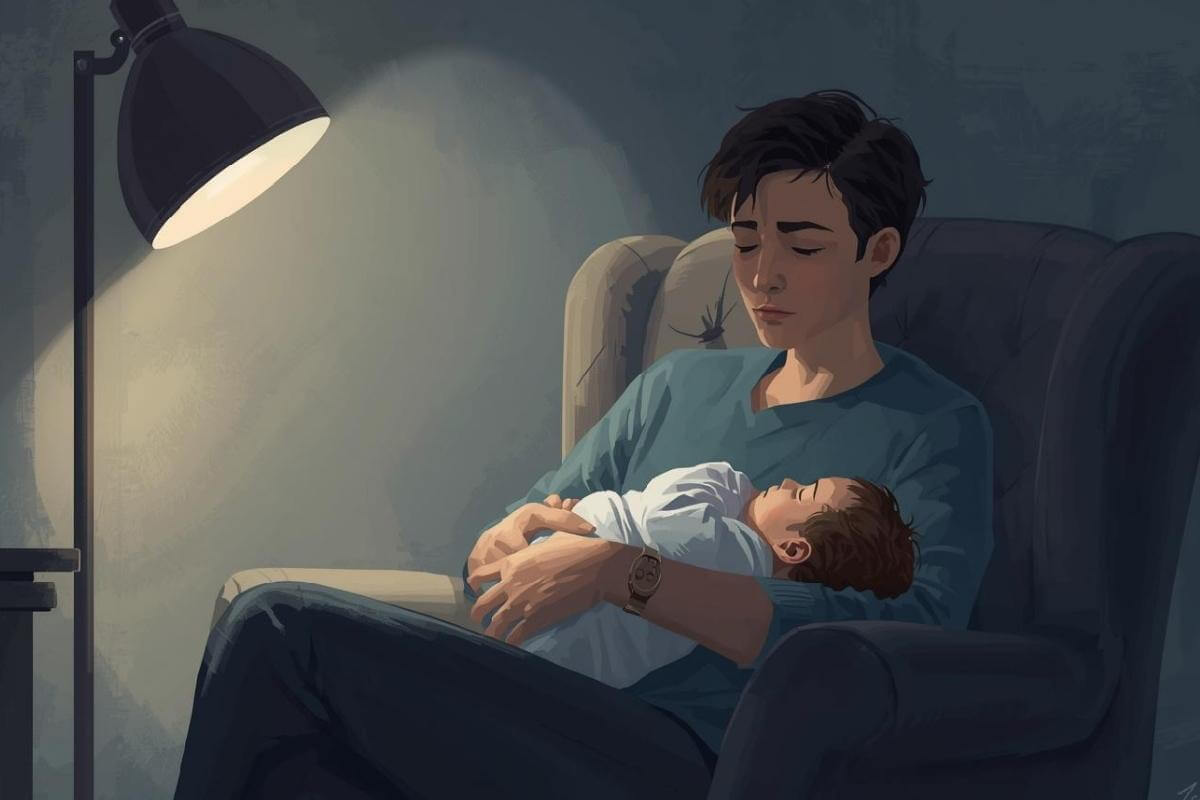
You’re holding your baby at 3 a.m. The house is quiet. Your partner is asleep. And you’ve never felt more alone in your entire life. That’s postpartum loneliness.
Which makes no sense, because you’re literally never alone. Your baby is attached to you almost constantly. Your partner is right there. Family keeps texting. Friends keep asking how you’re doing.
But somehow, you still feel completely isolated. Like you’re living on an island no one else can reach.
If this sounds familiar, you’re not imagining it. Postpartum loneliness can show up even when you have a partner, family nearby, and a healthy baby. Postpartum loneliness is real, it’s common, and it affects the vast majority of new parents regardless of how much support they have, how wanted their baby was, or how they became parents.
As Perinatal Support Workers with over 35 years of combined experience supporting families across Toronto and the GTA, we’ve sat with countless parents at 2 a.m. who’ve said some version of “I feel so alone.” And we’ve learned that loneliness in the postpartum period isn’t about being physically alone. It’s about feeling disconnected from yourself, from your partner, from your old life, and from any sense of reciprocal human connection.
So let’s talk about why this happens to all kinds of parents, why it’s so hard to admit, and what actually helps.
Why is postpartum loneliness so common?
Research shows that 82% of new parents experience loneliness at least some of the time, and nearly 1 in 3 feel lonely “always or often” during the first year postpartum.
That’s not a small percentage. That’s the overwhelming majority of people going through this transition feeling isolated and disconnected.
And here’s what makes it so confusing: you’re rarely physically alone with your baby. You’re with them constantly. Feeding them, changing them, holding them, soothing them, staring at them while they sleep to make sure they’re still breathing.
But babies aren’t reciprocal. They don’t offer emotional support, conversation, or companionship in any meaningful way. They need you constantly, but they give nothing back except the occasional smile (which, let’s be honest, is probably gas in the first few weeks).
So you’re surrounded by this tiny person who demands everything from you, and you’re more alone than you’ve ever been.
On top of that, your entire life becomes about the baby. Not about who you are as a person, not about your interests or goals or thoughts, just about keeping this baby alive. And when everything in your life revolves around one thing, it’s hard to find something new and interesting to talk about. People stop asking. Or worse, they ask, but they don’t really want to hear about your day because your day was just feeding and diapers and crying.
And even if you wanted to spend time with other people, you physically can’t. You’re exhausted. You’re tied to feeding schedules. You’re covered in spit-up. And even if someone offered to take the baby so you could go out, you’re too tired to be good company anyway.
So you end up isolated. Not because you’re physically alone, but because you’re emotionally and socially disconnected from everyone, including yourself.
Does biology cause postpartum loneliness?
There’s a biological component to postpartum loneliness, and it affects different parents in different ways.
For birthing parents: when brain chemistry shifts
After birth, your hormone levels are doing Olympic-level gymnastics. Estrogen and progesterone crash. Cortisol stays elevated from stress. And when these systems are dysregulated, the neurochemicals that help you feel connected to other people don’t work properly.
When hormones are functioning well, you feel more connected to your baby, more connected to your partner, and more motivated to seek social support. But when they’re crashing and shifting, those systems can misfire. You’re not just tired and overwhelmed. Your brain chemistry is actively working against your ability to feel connected.
For non-birthing partners: the invisible biological shift
Here’s what most people don’t know: non-birthing partners who were present during pregnancy also experience hormonal changes. Testosterone drops, cortisol can rise, and these shifts affect energy, mood, and social motivation.
Lower testosterone doesn’t just impact physical energy. It can make you feel less motivated to engage socially, less patient with interactions, and more withdrawn. You might not have the dramatic crash of birth, but your biology is still shifting in ways that make connection harder.
For adoptive and surrogacy parents: the adjustment without biological prep
If you became a parent through adoption or surrogacy, you didn’t have the months-long biological preparation. Your neurochemistry is adjusting in real-time while you’re learning how to care for a baby, navigate placement logistics, and deal with the emotional complexity of your specific path to parenthood.
The loneliness can be even more intense because you might not see yourself represented in mainstream postpartum content. Most resources assume pregnancy and birth. Most parent groups focus on birth stories. And when your experience doesn’t fit that mold, it’s easy to feel like you’re the only one going through this.
What else isolates new parents?
But here’s the thing: biology is only part of the story. Loneliness isn’t just about hormones. It’s about the complete disruption of your social life, your identity, and your daily routines.
Sleep deprivation
Sleep deprivation deserves its own mention, because it quietly magnifies every other factor below. When you’re exhausted, you don’t have the energy to reach out to people. You don’t have the patience for small talk. You don’t have the mental capacity to maintain relationships. Everything feels harder than it should, and social connection, which used to feel natural, now feels like one more impossible task on an already impossible list.
Your identity has shifted
You’re not the same person you were before. Your interests, your priorities, your sense of self, all of it has changed. And when you don’t know who you are anymore, it’s hard to connect with other people who still see you as the old version.
Your relationship with your partner has changed
You’re not partners and lovers anymore. You’re co-CEOs of a 24/7 operation. Your conversations revolve around logistics. And that emotional intimacy you used to have? It’s buried under exhaustion and resentment.
Why is it so hard to admit you’re lonely?
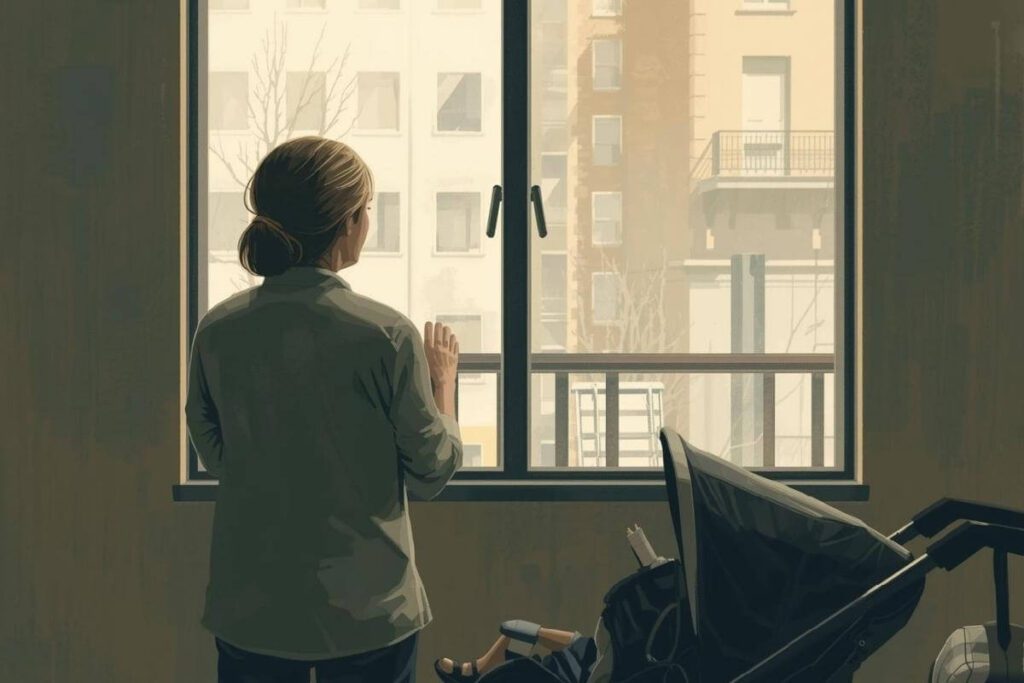
Here’s where expectations make everything worse.
You’re supposed to love your baby. You’re supposed to be happy. This is supposed to be the most joyful time of your life. If you’re not feeling that way, you must be a monster or a failure.
And so many people can’t have babies. You should be grateful for the opportunity. You should feel blessed. You shouldn’t complain.
Because you were built for this, right? People have been having babies forever. Everyone before you managed to figure it out. Why can’t you?
These narratives make it almost impossible to admit that you’re struggling. That you’re lonely. That you miss your old life. That you love your baby but you also feel completely isolated and disconnected.
So you don’t say anything. You smile when people ask how you’re doing. You post carefully curated photos on social media where everything looks perfect. And you suffer silently, wondering if everyone else is handling this better than you are.
Spoiler: they’re not. They’re just not talking about it either.
Does social media make postpartum loneliness worse?
Let’s talk about the elephant in the room: social media.
Studies consistently show that social media use is associated with increased feelings of loneliness and inadequacy.
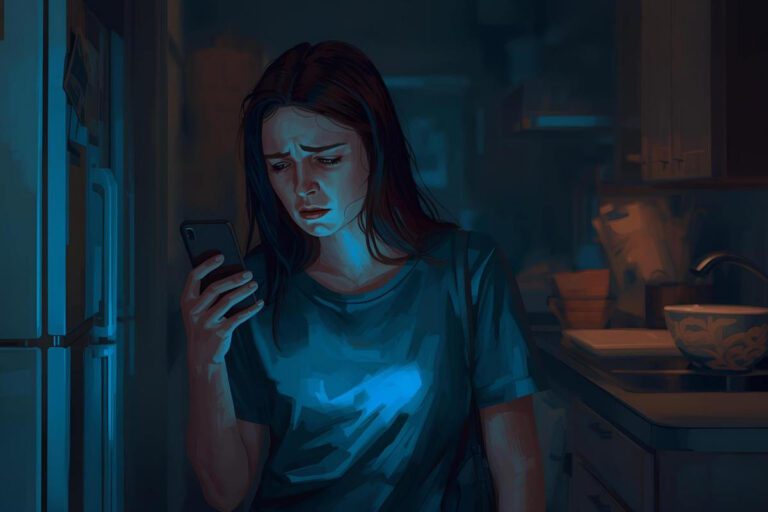
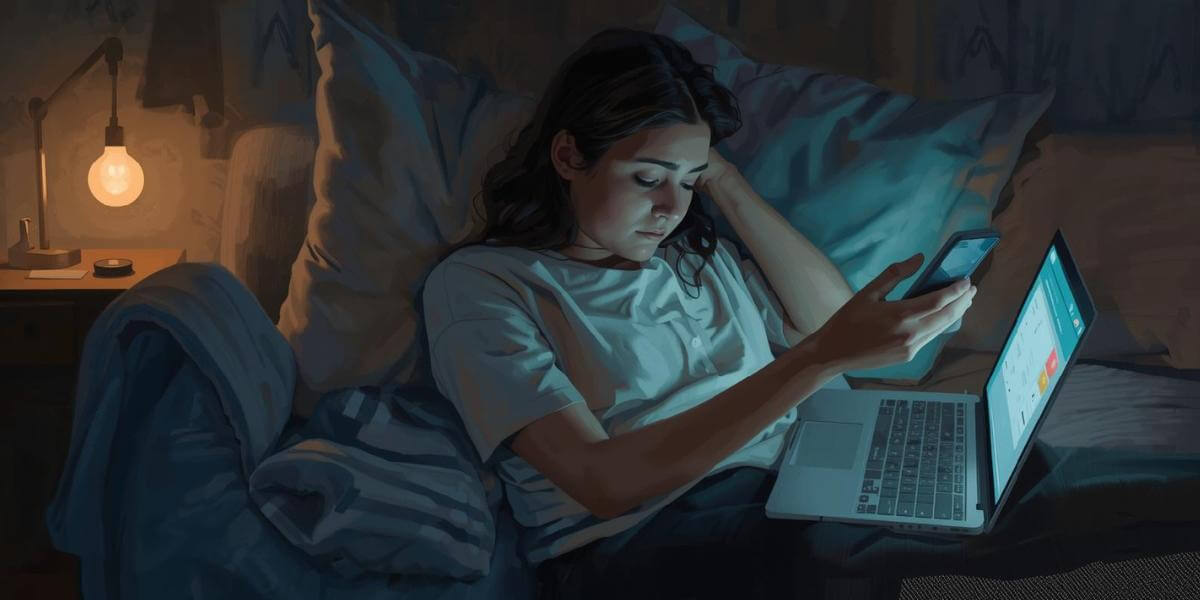
You’re sitting on your couch at 2 a.m., covered in spit-up, exhausted beyond measure, trying to get your baby to stop crying. And you open Instagram and see someone else’s baby sleeping peacefully in a perfectly styled nursery while the parent looks rested and happy and like they have their life together.
And suddenly you feel even more alone. Because everyone else seems to be thriving, and you’re barely surviving.
But here’s the reality: social media is a highlight reel. Nobody posts about the 3 a.m. meltdown where they couldn’t get the baby to stop crying and they sat on the floor and cried too. Nobody posts about the loneliness, the exhaustion, the feeling like you’re failing at everything.
They post the one moment of the day that looked good. And you’re comparing your entire reality to their curated facade.
Social media doesn’t create community. It creates comparison. And comparison makes loneliness exponentially worse because it convinces you that everyone else is fine and you’re the only one struggling.
If social media is making you feel worse, it’s okay to put your phone down. It’s okay to mute people. It’s okay to take a break. Protecting your mental health is more important than staying connected to a feed that makes you feel inadequate.
Why do sleep deprivation and constant demands deepen loneliness?
There’s a reason sleep deprivation is used as a torture method. It breaks down your ability to function, to think clearly, to regulate emotions, and to maintain connections with other people.
When you’re exhausted, there’s no time or energy for anything else. And even if people come to you, the visit ends up being all about the baby. Everyone wants to hold the baby, coo at the baby, give you advice about the baby. Nobody asks how you’re doing as a person.
We walk into clients’ homes in Toronto and the GTA, and the first thing we do is ask, “How are things going? How’s the baby? How’s the house?” And then we stop, make eye contact, and ask, “How are you doing?”
The number of times parents have told us that no one else has asked them that question is staggering.
Everyone wants to know about the baby. Nobody asks about the parent. And that deepens the loneliness because it reinforces the feeling that you don’t matter anymore. It can start to feel like you exist only to keep this baby alive.
Sleep deprivation also makes it impossible to be present for other people. You don’t have the energy to maintain friendships. You can’t focus on conversations. You forget things people tell you. And slowly, your social circle starts to drift away because you’re not able to show up the way you used to.
This isn’t your fault. You’re not failing at friendship. You’re just trying to survive.
How does the partner dynamic intensify isolation?

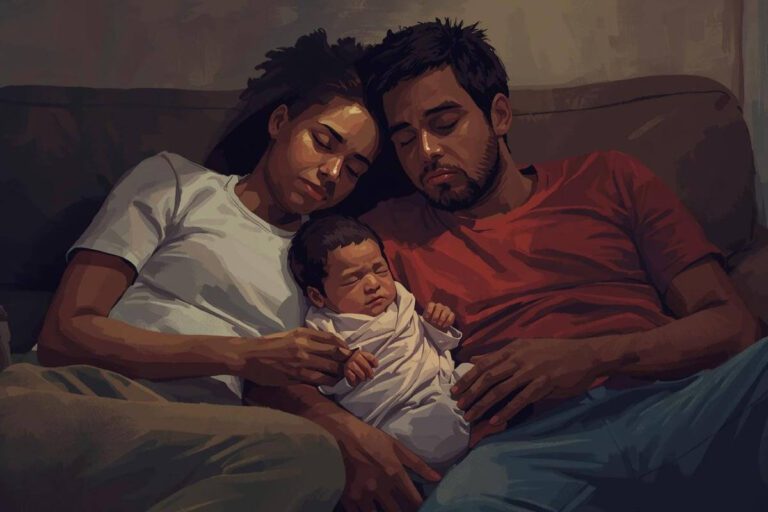
Here’s something we see constantly: the loneliness between partners who are both in the same house, both caring for the same baby, and both feeling completely alone.
When you’re both exhausted, both overwhelmed, and both struggling, it’s incredibly easy to stop seeing each other as teammates and start seeing each other as obstacles. Or worse, as one more person demanding something from you.
The birthing or primary parent often feels: touched out, resentful that their partner gets to leave the house, unseen and unappreciated, like they’re the only one who knows how to do things right.
The non-birthing or non-primary partner often feels: useless, pushed out, like nothing they do is good enough, resentful that they can’t help more, guilty for feeling resentful.
And instead of talking about it, you both shut down. You stop connecting. You stop talking about anything except logistics. And the loneliness grows because the person who used to understand you better than anyone now feels like a stranger.
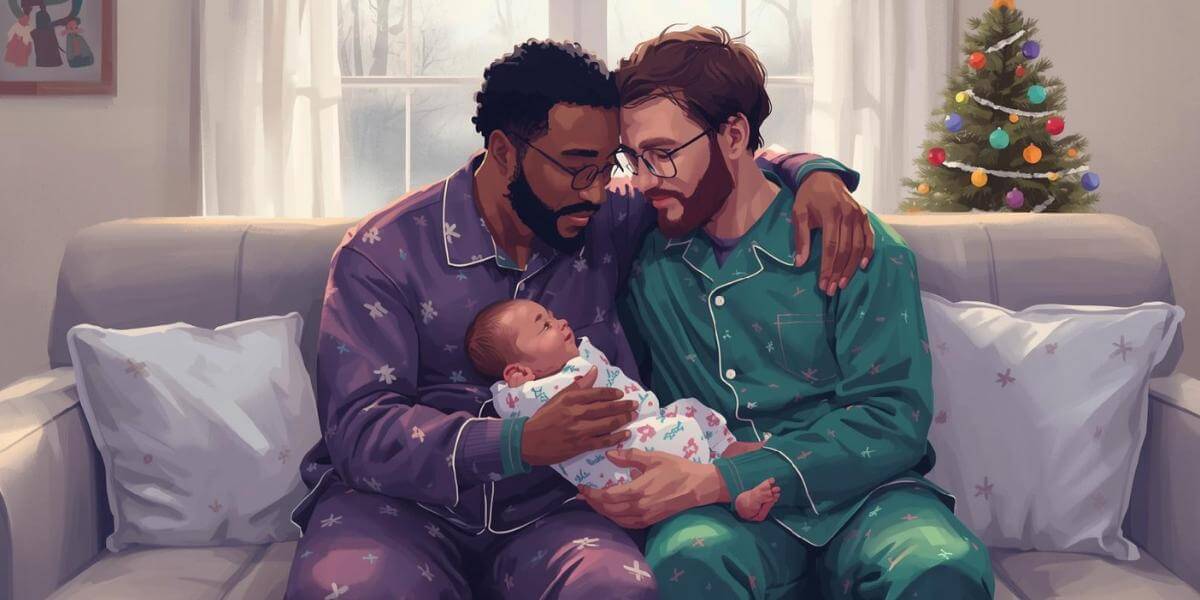
This happens in every kind of partnership. Heterosexual couples, same-sex couples, co-parents who aren’t romantically involved, the dynamic is the same. When both people are drowning, it’s really hard to reach out and save each other.
Why is loneliness so hard for the non-primary parent?
If you’re the partner who’s not doing most of the caregiving, whether because you’re back at work, because your partner is feeding from their body, or because you just naturally fell into that role, the loneliness can be particularly brutal.
You’re watching your partner bond with the baby in ways you can’t. You’re trying to help but being told you’re doing it wrong. You’re desperate to be useful but feeling increasingly secondary.
And nobody asks how you’re doing. All the check-ins, all the support, all the attention goes to the birthing parent and the baby. You’re expected to hold it together, to be “the rock,” to support everyone else while your own needs get completely ignored.
You’re lonely in a house full of people because your role has become “the helper” instead of “the parent.” And that’s isolating in a way that’s hard to explain to people who haven’t experienced it.
What are the signs that loneliness is becoming overwhelming?
Sometimes loneliness crosses from “this is hard” into “I need more support.” Here are some signs to watch for:
- You’re not leaving the house. Days go by and you haven’t been outside. You’re avoiding errands, avoiding people, avoiding anything that requires effort.
- You’re not eating. You forget meals, or you just can’t be bothered, or nothing sounds good. Food feels like one more thing you don’t have energy for.
- You’re not showering or bathing. Basic self-care feels impossible. You’re wearing the same clothes for days. Brushing your teeth feels optional.
- You’re not talking to others. You’re isolating even more. You’re not texting friends back. You’re not calling family. You’re pulling further and further inward.
- Everything feels pointless. You’re going through the motions but nothing brings joy or connection. You feel numb, detached, like you’re watching your life from the outside.
If any of this sounds familiar, it’s time to reach out for help. Loneliness that severe isn’t something you just push through. It’s a sign that you need more support, whether that’s from a therapist, a postpartum professional, or your healthcare provider.
What small daily habits help you feel connected?
You don’t need to fix everything at once. But there are small, practical things you can do that make loneliness feel slightly less crushing.
- Get dressed every day. Not in fancy clothes. Just in something clean that isn’t pajamas. It signals to your brain that you’re a person, not just a baby-care machine.
- Shower at least three times a week. Even if it’s a quick rinse. Even if the baby is crying. You’re allowed to take five minutes for yourself.
- Leave your bedroom. Spend time in other parts of your home. Sitting in the same room all day amplifies isolation.
- Eat three times a day. Even if it’s just a granola bar and some fruit. Nourishing your body helps stabilize your mood.
- Stay hydrated. Dehydration worsens exhaustion and mood. Keep water within reach constantly.
- Have a friend you talk to at least once a week. Even if it’s just a text exchange. Maintain one connection outside your home.
- Plan a date night at least once a month. After six to ten weeks, get out of the house with your partner if you have one. Even just for ice cream. Reconnect as adults, not just co-parents.
- Find an activity out of the home at least biweekly. After six to ten weeks, look for parent-baby groups, swimming sessions, library story time, anything that gets you around other people.
These aren’t cure-alls. But they’re small anchors that help you feel like a person again instead of just a parent.
How does in-home support reduce postpartum loneliness?

One of the most underrated benefits of in-home postpartum support is companionship.
When you have someone in your home who understands what you’re going through, who’s there to offer guidance and education and tips, who lets you vent without judgment, it changes everything.
You’re not just getting help with the baby. You’re getting human connection with someone who sees you as a person, not just as a parent.
We give parents sleep, which makes it easier to be productive and confident in other areas of life. We suggest ideas and provide education so they feel more capable. And when things start working, when the baby settles more easily, when feeding goes more smoothly, parents feel more confident reaching out to others and rebuilding their social connections.
For families in Toronto and the Greater Toronto Area, including North York, Vaughan, Mississauga, Brampton, Oakville, Milton, Hamilton, and surrounding areas, Cradira Support provides overnight and daytime in-home care that includes not just practical baby care, but emotional support and companionship during one of the loneliest phases of life.
And for families who can’t access in-home support, virtual support, the Household Systems Guide and the Cradira app offer ways to get connected, informed and supported from home.
Can virtual support help with postpartum loneliness?
It can. Virtual support is non-medical, so it isn’t therapy, but it can be the conversation you were missing. The “Now What” Call is built for one specific “we need to talk this through with someone who gets it” moment, and partners, co-parents and key support people are welcome. You can book from anywhere in Canada and beyond. See virtual postpartum support.
If you want to understand where your time and energy are actually going before you reach out, you can take the free Time Quiz or House Quiz. The Household Systems Guide also has a roster for writing down who can help with specific things, so asking for help doesn’t depend on remembering who offered.
How do you gently rebuild your social circle?
You don’t have to do this all at once. But here are some ways to start reconnecting:
- Connect with other parents in similar stages. Look for community groups, parent-baby classes (we know that term is often gendered, but it’s what they’re called), parent-baby swim sessions, play centers, or library programs. Being around people who understand what you’re going through helps you feel less alone.
- Keep in touch with people from your prenatal classes. If you took a prenatal class, those people are going through the same phase at the same time. Text them. Meet for coffee. Form a group chat. You already have something in common.
- Join online communities. Online groups can be a lifeline when you can’t leave the house but desperately need to talk to someone who gets it.
- Look for local events. Check community centers, libraries, and parent resource centers for drop-in programs and events. You don’t have to commit to anything long-term. Just show up when you can.
The goal isn’t to rebuild your entire social life overnight. The goal is to find one or two connections that make you feel less isolated.
How can partners, family and friends help?
If you’re someone trying to support a new parent, here’s what actually helps:
- Show up with food. Not just once. Regularly. Meal delivery, freezer meals, anything that means they don’t have to think about cooking.
- Do grocery shopping. Ask for their list and handle it. One less thing they have to worry about.
- Care for the baby. Hold the baby so they can shower, nap, eat, or just exist as a person for twenty minutes.
- Help with the home. Do dishes. Fold laundry. Take out the trash. Fill in the gaps so they’re not drowning in logistics.
- Don’t just plan an outing. If you want to take them somewhere, show up an hour early and help them get ready. Packing a diaper bag, getting the baby fed and changed, and leaving the house is a monumental task when you’re exhausted.
- And most importantly, ask them how they’re doing. Not “how’s the baby.” How are they. And then actually listen to the answer.
When should you reach out for professional support?
You should reach out for professional support when loneliness starts impacting your quality of life, your ability to care for yourself, or your ability to care for your baby.
If you’re struggling with mental health, therapy should always be the first priority. A therapist who specializes in perinatal mental health can assess for deeper issues like postpartum depression or anxiety and provide treatment.
Virtual support allows for connection, education, and guidance when you’re not ready for someone in your home or when in-home support isn’t accessible.
If you are in crisis or having thoughts of harming yourself or your baby, call or text 988 (Canada’s Suicide Crisis Helpline) at any time, or go to your nearest emergency department. Postpartum Support International also has resources and a helpline (1-800-944-4773) available to all parents.
In-home support through Cradira Support provides not just practical help with the baby, but companionship, someone to talk to, and the time and energy to reconnect with friends and build community because you’re not running on empty all the time.
You don’t have to be in crisis to ask for help. If loneliness is making life harder, that’s enough of a reason to reach out.
Where can you get help?
For families in the Greater Toronto and Hamilton area looking for in-home support that includes companionship and emotional guidance, you can reach Cradira Support through our Contact page. We work across North York, Etobicoke, Scarborough, Vaughan, Woodbridge, Bolton, Brampton, Mississauga, Oakville, Milton, Stoney Creek, and Hamilton.
If you’re looking for virtual connection and education, explore Cradira Digital: free quizzes, the Household Systems Guide, one-on-one virtual support, and the Cradira app available across Canada and beyond. Not sure where to start? Book a free intro call to see whether we’re a good fit.
You can also check out:
Our FAQs for answers to common questions
Why Postpartum Feels So Overwhelming for understanding hormones and exhaustion
How to Survive the First Six Weeks for early postpartum strategies
Postpartum Burnout Isn’t Normal for what depletion looks like before it becomes a crisis
You’re not alone in feeling alone
Postpartum loneliness is one of the most common and least talked about parts of becoming a parent. You can be surrounded by people and still feel completely isolated. You can love your baby fiercely and still feel disconnected from everything that used to matter.
This isn’t a moral failing. This isn’t a sign that you’re ungrateful or broken. This is a normal response to a massive life transition combined with sleep deprivation, identity loss, and the complete disruption of your social connections.
You don’t have to feel this way forever. Loneliness eases as sleep improves, as you find your rhythm, as you connect with other parents who understand, and as you slowly rebuild a life that includes both parenting and personhood.
But you don’t have to wait for it to get better on its own. You’re allowed to ask for help. You’re allowed to admit you’re struggling. You’re allowed to reach out for support without feeling like you’re failing.
Loneliness thrives in silence. Talking about it, reaching out, connecting with people who get it, that’s how you break the cycle.
You’re not alone in feeling alone. And there’s support available when you’re ready.
You’ve got this. And we’ve got you.
Frequently asked questions
What is postpartum loneliness?
Postpartum loneliness is feeling disconnected from yourself, your partner, your old life and any sense of reciprocal human connection, even when you are rarely physically alone.
How common is postpartum loneliness?
Research shows that 82% of new parents experience loneliness at least some of the time, and nearly 1 in 3 feel lonely always or often during the first year postpartum.
Can you feel lonely even with a partner and family nearby?
Yes. Babies aren’t reciprocal, sleep deprivation drains your energy for connection, and your identity and relationship change, so you can feel isolated even when you’re never physically alone.
How do you know when loneliness is becoming overwhelming?
Warning signs include not leaving the house, not eating, not showering, not talking to others, and everything feeling pointless. If this sounds familiar, reach out to your healthcare provider, a therapist or a postpartum professional.
What helps postpartum loneliness?
Small daily anchors like getting dressed, eating regularly and talking to one friend each week help, as does connecting with other parents and having someone ask how you are doing. In-home or virtual support can add that human connection.


One Comment